

F O L D B O O K
LIMITLESS SKETCHBOOK & CURATION TOOL
FOLD
BOOK
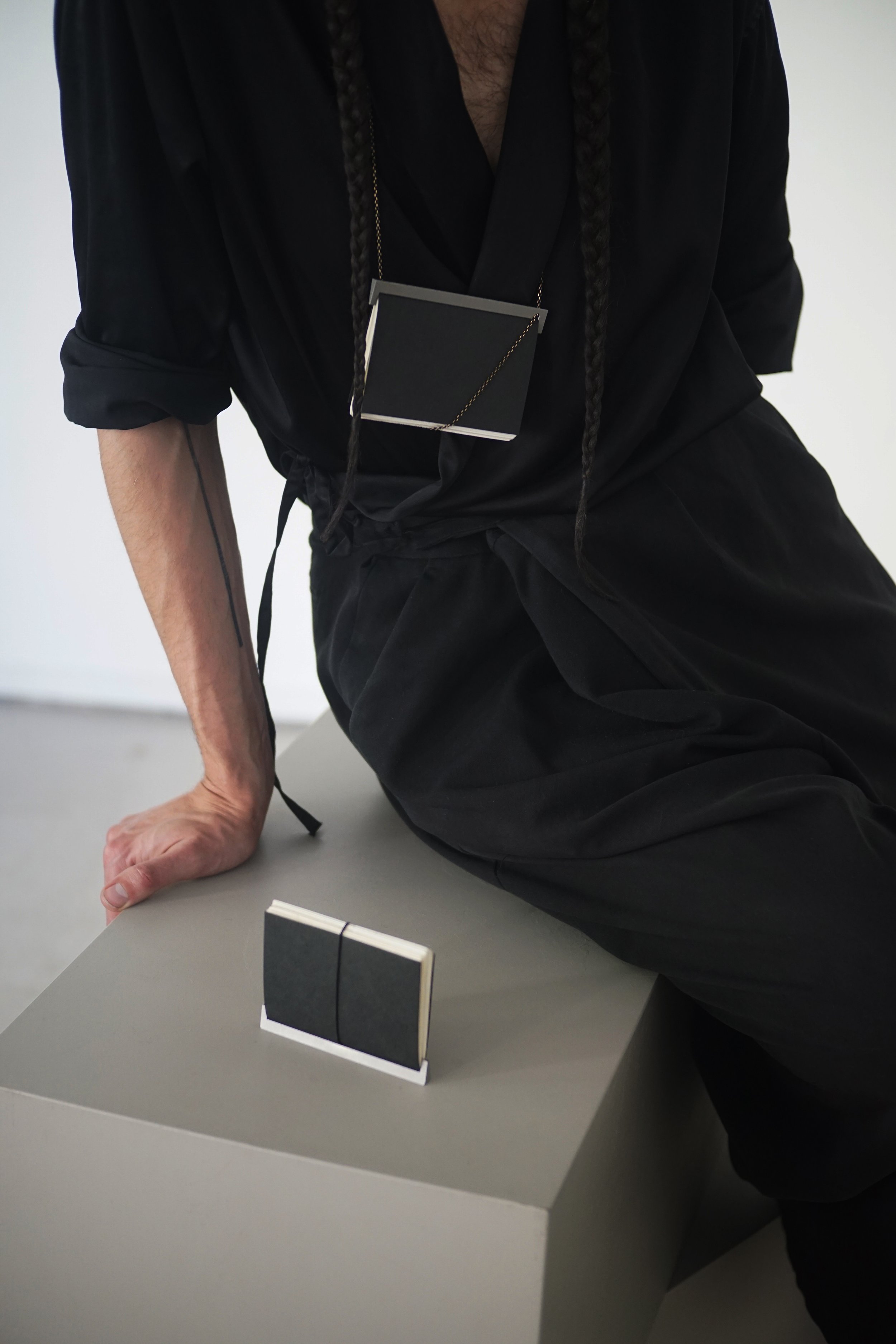
BE LIMITLESS IN THE WAY YOU CHOOSE PAPER THAT FITS YOUR WORK, PROJECT AND WAY OF CREATING
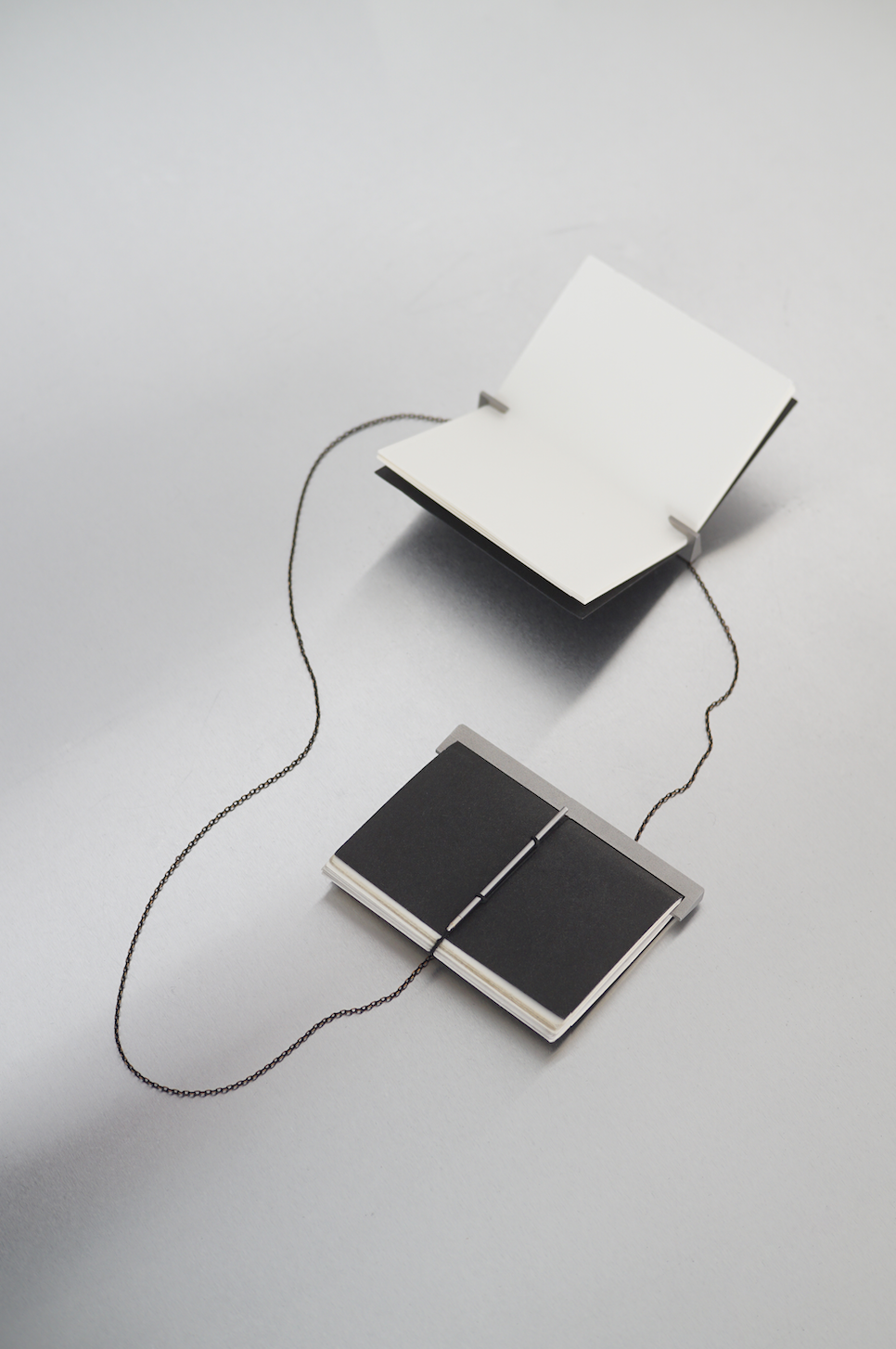
LAY OUT IDEAS, MOVE PAGES, REARRANGE AND KEEP ONLY WHAT MATTERS. TURN THE SKETCHBOOK INTO A CURATION TOOL WHERE IDEAS CAN BE VIEWED ALL AT ONCE AS THEY EVOLVE
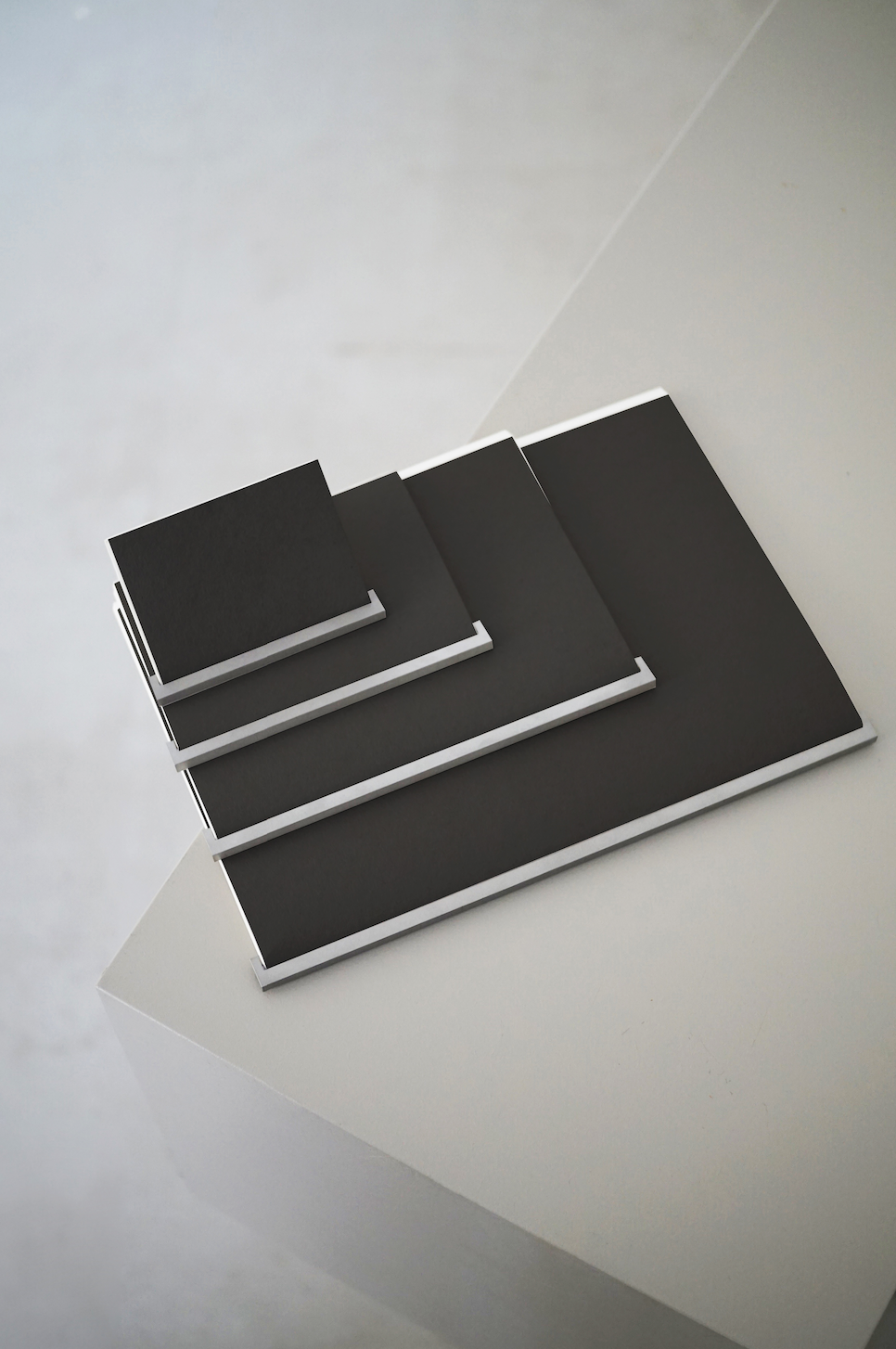
CHOOSE THE MATERIALS THAT MATCH YOUR AESTHETIC AND THE SIZE THAT FULFILS THE FUNCTION
-
FOLDBOOK is a refillable sketchbook and curation tool designed by ERLANDS.
Unlike conventional sketchbooks, which determine the format, binding and sequence of your pages, FOLDBOOK is built around a single permanent element: a stainless-steel holder. Everything inside it can change.
Pages and covers can be added, removed, rearranged and archived. Standard A6, A5, A4 and A3 paper formats can be combined within the system, while other papers can be folded or adapted to fit.
The result is an open framework for sketching, writing, collecting, developing and presenting ideas.
-
FOLDBOOK began in 2016 from a simple problem encountered in everyday creative work.
While working across interior and product design, branding and art, ERLANDS needed different paper sizes, weights, surfaces and formats for different situations. Conventional sketchbooks forced these different needs into a fixed structure.
Loose paper provided the freedom, but carrying and organising it became difficult.
FOLDBOOK was developed as an answer: a way to keep the freedom of individual sheets while giving them a physical structure that could travel, evolve and be curated.
What began as a personal tool developed through approximately ten years of daily use into a system for capturing, editing, organising and archiving ideas.
-
FOLDBOOK is not only designed to hold pages. It is designed to let you decide how those pages belong together.
Pages can be grouped by project, separated into sections, reordered as an idea develops or removed when they are no longer relevant. Covers can also be moved and combined to create different configurations.
Ideas rarely develop from the first page to the last. They branch, connect, change direction and return to earlier thoughts.
FOLDBOOK gives this non-linear process a physical form.
It can therefore become both a tool for developing ideas and a way of curating them.
-
FOLDBOOK does not require proprietary paper.
It supports standard international paper formats including A6, A5, A4 and A3, allowing users to choose the paper that best suits their process.
Different weights, textures, colours and paper types can be combined according to the task. A sheet can be written on, drawn on, printed, folded or taken from another project and then become part of the FOLDBOOK.
The system adapts to the paper rather than forcing the paper to adapt to the system.
Paper improves the system rather than adapting to it.
FOLDBOOK holds approximately 10–15 sheets, depending on paper thickness, including the cover. Its intentionally limited capacity encourages users to carry the information that matters most while allowing completed work to move into an archive.
-
FOLDBOOK functions as a reconfigurable analogue workspace rather than a fixed-bound sketchbook.
Pages can be:
added
removed
rearranged
separated by project
combined with other papers
archived
returned to the active sketchbook when needed
This allows a sketchbook to evolve together with the work.
A project does not have to follow a predetermined sequence, and ideas do not have to remain where they were first recorded.
-
At the centre of FOLDBOOK is a single-piece stainless-steel holder designed to remain in use while everything around it changes.
Its construction deliberately avoids hinges, springs and unnecessary mechanisms. Paper is inserted with a simple gesture: gently bend the sheet and place it into the holder.
The elongated, slightly triangular geometry gives the holder structural strength while its weight provides stability and allows FOLDBOOK to stand vertically.
The two contact teeth are polished and rounded to protect the paper during insertion and removal. The remaining surface has a subtle texture that provides a tactile quality while helping minimise visible scratches and markings over time.
The holder is designed as the long-life component of the system.
-
The rear of the stainless-steel holder incorporates discreetly engraved centimetre markings along its length.
Additional markings indicate paper positioning for the corresponding format.
The scale is integrated into the object rather than presented as an additional feature, allowing FOLDBOOK to function as a measuring tool whenever needed.
These details remain almost invisible until they become useful.
-
A FOLDBOOK is designed to continue beyond its first set of pages.
When a sketchbook is filled, completed pages can be moved into an accompanying folder and archived. Fresh paper can then be placed into the holder.
The folders become part of the system rather than simply serving as packaging. They can store finished projects, unused paper and ideas that may become relevant again.
Instead of replacing the entire sketchbook, the permanent holder continues through many configurations and sets of pages.
One holder can continue through many sketchbooks.
Rather than discarding an entire notebook after it has been filled, users simply replace the paper while continuing to use the same stainless steel structure. This extends the life of the product and supports a more sustainable approach to everyday creative tools.
-
The material logic follows the same principle as the system.
The permanent holder is made from stainless steel, selected for its strength, corrosion resistance and long-term durability.
The inner papers are natural-colour, uncoated papers selected for writing, sketching, drawing and mixed-media work.
The covers are made from recycled cardboard produced from 100% waste paper.
The paper and cover materials are recyclable and carry relevant FSC, PEFC and environmental certifications.
The materials are selected not only for their performance, but for how they can remain useful as the FOLDBOOK evolves.
The project reflects a belief that everyday objects should support creativity over decades rather than follow short product life cycles. Each design decision from the use of stainless steel to the modular paper system was developed to create a tool that can evolve alongside its owner.
-
FOLDBOOK separates the durable part of the object from the consumable part.
The stainless-steel holder remains while paper is replaced or reconfigured.
This avoids replacing an entire sketchbook simply because its pages are full and allows the same object to accompany different projects over many years.
The intention is not to add sustainability as a feature.
It is built into the logic of the system:
Keep the durable part.
Replace only what needs replacing.
Give the paper a life beyond a single sketchbook. -
There is no prescribed way to use FOLDBOOK.
One person may use it for drawing. Another may use it for writing, architecture, design development, planning or collecting references. Someone else may use it to organise an ongoing project or archive completed work.
The object remains the same while its contents, configuration and meaning change through use.
FOLDBOOK is designed to adapt to its owner rather than asking its owner to adapt to it.
-
FOLDBOOK is designed for people who think, develop and organise ideas through physical interaction with paper.
It can be used by:
artists
architects
designers
writers
engineers
students
researchers
photographers
creative professionals
anyone who sketches, writes or develops ideas by hand
Its open paper system allows each person to build a configuration around their own way of working.
-
FOLDBOOK was designed by ERLANDS as part of an ongoing exploration into objects that support creative work over long periods of time.
The project began in 2016 and evolved through approximately a decade of development and daily use.
The design reflects a belief that creative tools should not impose a fixed structure on an evolving process.
Every element—from the stainless-steel holder and its geometry to the paper system, measuring markings, contact points and archival folders—was developed around one principle:
the tool should adapt to the person using it.
FOLDBOOK is the physical starting point of ERLANDS' creative practice.
-
FOLDBOOK launches in 2026, exactly ten years after the original idea began.
What started as a response to the limitations of conventional sketchbooks has become a personal system for capturing, editing, organising, developing and archiving ideas over time.
It is a framework for sketchbook, , notebook, planner and calendar.
A tool, but also an object designed to develop a life of its own through use.
FOLDBOOK — LIMITLESS SKETCHBOOK & CURATION TOOL THAT ADAPTS TO ITS OWNER.
SUBSCRIBE TO NEWSLETTER
sign up to receive updates on latest offers and releases
SHARE YOUR FOLDBOOK STORY
Share how you use FOLDBOOK and inspire others to make it their own
FOLDBOOK 2026 © ERLANDS STUDIO